
Colour is more than just a design choice, it’s a powerful tool that shapes how we feel, interact, and experience a space. As the heart of the home, the kitchen is where we gather, cook, and create memories, making it essential to choose colours that not only enhance the aesthetic appeal but also evoke the right emotions.
From energising reds to calming blues, colour psychology can help you design a kitchen that aligns with your personality, lifestyle, and functional needs. Whether you want a lively, welcoming space or a serene retreat, here’s how different colours influence mood and how to incorporate them into your kitchen.
How Colour Psychology Affects Your Kitchen
According to experts in Applied Colour Psychology, colour affects our emotions and behaviour in ways we may not even realise. Some of our colour preferences are shaped by personal experiences and culture but colour itself has intrinsic properties that trigger specific responses.
For instance, people who live in colder climates often prefer warm, bright colours, while those in sunnier regions gravitate towards cooler, subdued tones. When applied to kitchen design, these psychological responses can help create an atmosphere that suits your needs.
Warm Colours: Energy & Appetite Stimulation
Red, orange, and yellow are warm, stimulating colours that create a sense of warmth and excitement. They can also increase appetite and encourage social interaction, making them great choices for a lively kitchen.
- Red: A bold and passionate colour that enhances energy and appetite, red works well as an accent colour on backsplashes, barstools, or small appliances.
- Orange: A cheerful and inviting hue that promotes sociability, orange is perfect for an eat-in kitchen or breakfast nook.
- Yellow: Associated with happiness and positivity, yellow brightens up a kitchen and works well in spaces with limited natural light.


Cool Colours: Calm & Refreshing Ambience
Cool tones like blue, green, and purple create a sense of tranquillity and balance. These colours are ideal for those who want a kitchen that feels serene and refreshing.
- Blue: A soothing colour that promotes relaxation, blue is great for coastal or modern kitchens. However, because it’s known to suppress appetite, it’s best used in moderation.
- Green: Representing nature and harmony, green is a versatile choice that pairs beautifully with natural wood tones and organic materials.
- Purple: Often associated with luxury and creativity, soft purples like lavender or lilac can bring a unique, sophisticated touch to your kitchen.


Neutral Colours: Timeless Elegance & Versatility
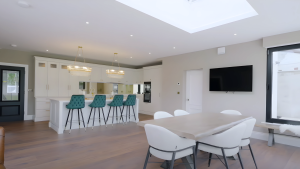
Neutral colours such as white, beige, grey, and taupe provide a classic and adaptable foundation for any kitchen style. They create a sense of balance and allow other design elements, such as cabinetry, countertops, and décor to take centre stage.
- White: Clean and timeless, white makes a small kitchen feel larger and more open. Add texture with wood accents or pops of colour to avoid a sterile look.
- Grey: A modern and sophisticated choice, grey works well with both cool and warm tones, making it an excellent backdrop for a variety of kitchen styles.
- Beige & Taupe: These warm neutrals add softness and cosiness, creating a welcoming environment without overwhelming the space.


Dark Colours: Bold & Dramatic Appeal
- Black: Adds depth and sophistication to your kitchen, especially when paired with metallic finishes or natural wood. It can be used on cabinetry or accent pieces to create a luxurious, contemporary feel. However, balance it with lighter tones to avoid overwhelming the space.
- Coffee Brown: A rich, earthy tone that exudes warmth and elegance. It pairs well with gold or copper fixtures and complements natural materials like wood and stone. Ideal for creating a timeless, cozy atmosphere.
- Navy: A deep, calm colour that offers a sophisticated and understated look. Navy works beautifully with both light and dark accents, creating a bold yet serene environment. It’s perfect for cabinets, islands, or feature walls, adding drama without being overpowering.


Choosing the Perfect Colour Palette for Your Kitchen
Now that you understand how colour affects mood and function, here are some popular kitchen colour schemes and their benefits:
1. Classic White for Timeless Appeal
A white kitchen is bright, airy, and versatile. It works with any style, from modern minimalism to farmhouse charm. To add depth, incorporate natural textures like wood, marble, or metal finishes.
2. Bold & Vibrant for Personality & Drama
If you love making a statement, go for deep blues, emerald greens, or rich reds. These colours bring character and sophistication to cabinets or accent walls, creating a striking focal point.
3. Calming Neutrals for a Soft, Serene Look
Soft greys, warm beiges, and taupe provide a soothing atmosphere that complements a variety of design aesthetics. Pair them with natural elements like stone countertops or wooden shelves for an inviting feel.
4. Nature-Inspired Hues for an Organic Touch
Earthy greens, warm browns, and sandy tones create a sense of harmony and connection to nature. These colours work well with natural light and add warmth without feeling overpowering.
5. Monochromatic for a Cohesive Look
Sticking to a single colour family, such as various shades of blue or grey, creates a sophisticated, cohesive design. Layering different tones of the same colour adds depth and interest without overwhelming the space.
Beyond Aesthetics: How Colour Impacts Kitchen Functionality
Choosing the right colour isn’t just about aesthetics, it can also enhance the functionality of your kitchen:
- Appetite Stimulation: Warm colours like red and orange can encourage eating and socialising, making them great for open kitchens and dining areas.
- Space Perception: Lighter colours create an illusion of space, making small kitchens feel bigger, while darker tones add coziness and intimacy.
- Focal Points: Bold colours can draw attention to specific areas, such as a statement backsplash or an island, making them stand out as design features.
- Mood Regulation: Cool tones reduce stress and promote focus, making them ideal for kitchens where cooking can sometimes feel overwhelming.
The Role of Personal and Cultural Influences
While colour psychology provides general guidelines, personal preferences and cultural backgrounds play a crucial role in how we perceive colour. In some cultures, white represents purity, while in others, it signifies mourning. Similarly, some people find yellow energising, while others may see it as overwhelming.
The key is to choose a palette that aligns with your emotional needs and lifestyle while also complementing the rest of your home.
Final Thoughts
The colours you choose for your kitchen can influence everything from mood and appetite to functionality and style. Whether you prefer a bright and bold kitchen or a soft and soothing space, understanding colour psychology can help you create a design that reflects your personality while enhancing your daily experience.
